How to Save Money on Taxis: 10 Proven Tactics
Most riders overpay because they don't check every app. Here are 10 proven tactics for paying less on every ride.


Key facts
- • The single biggest saving comes from comparing all ride apps instead of defaulting to one
- • Surge pricing is responsible for most "expensive ride" experiences — avoiding it is tactic #3
- • Local taxi apps often beat Uber in Europe, Latin America, and the Nordics
- • Payfair automates the comparison so you can apply all 10 tactics on every ride
Why taxi prices vary so much
Ride prices shift throughout the day based on demand, weather, events, time, and regulatory structure. Uber and Lyft use algorithmic surge pricing that doubles or triples fares during peak demand. Traditional metered taxis are regulated and don't surge. Local ride-hailing apps like Bolt or Cabify often use different pricing models in the same city. The result: on any given route, the cheapest option can change from ride to ride. That's exactly why aggregators exist.
The 10 tactics
Each of these works on its own. Stacked together, they produce the biggest possible savings on every ride. Payfair automates several of them for you, but knowing them gives you the full picture.
How much can you actually save?
The honest answer: it depends heavily on your city, time of day, and what you were going to pay otherwise. In cities with strong local alternatives (most of Europe, Spain, Latin America, the Nordics), savings can be substantial because Uber or Lyft aren't always the cheapest option. In cities where ride-hailing dominates (most of the US), the biggest wins come from avoiding surge and picking the right tier. Payfair's savings tracker shows your actual personal savings over time based on real rides you've taken.
Avoiding common rip-offs
Beyond the 10 tactics, a few common pricing traps are worth knowing. Airport surcharges vary by airport and provider — sometimes walking a short distance from the official pickup zone avoids the surcharge entirely where local rules allow. Black and high-end ride tiers are rarely worth the markup for most routes. Tolls and fees are sometimes bundled and sometimes added — Payfair shows the all-in price when available. And fixed-price providers like Cabify insulate you from surge but can be higher during off-peak. Read the total before confirming.
The 10 tactics
1. Compare every app on every ride
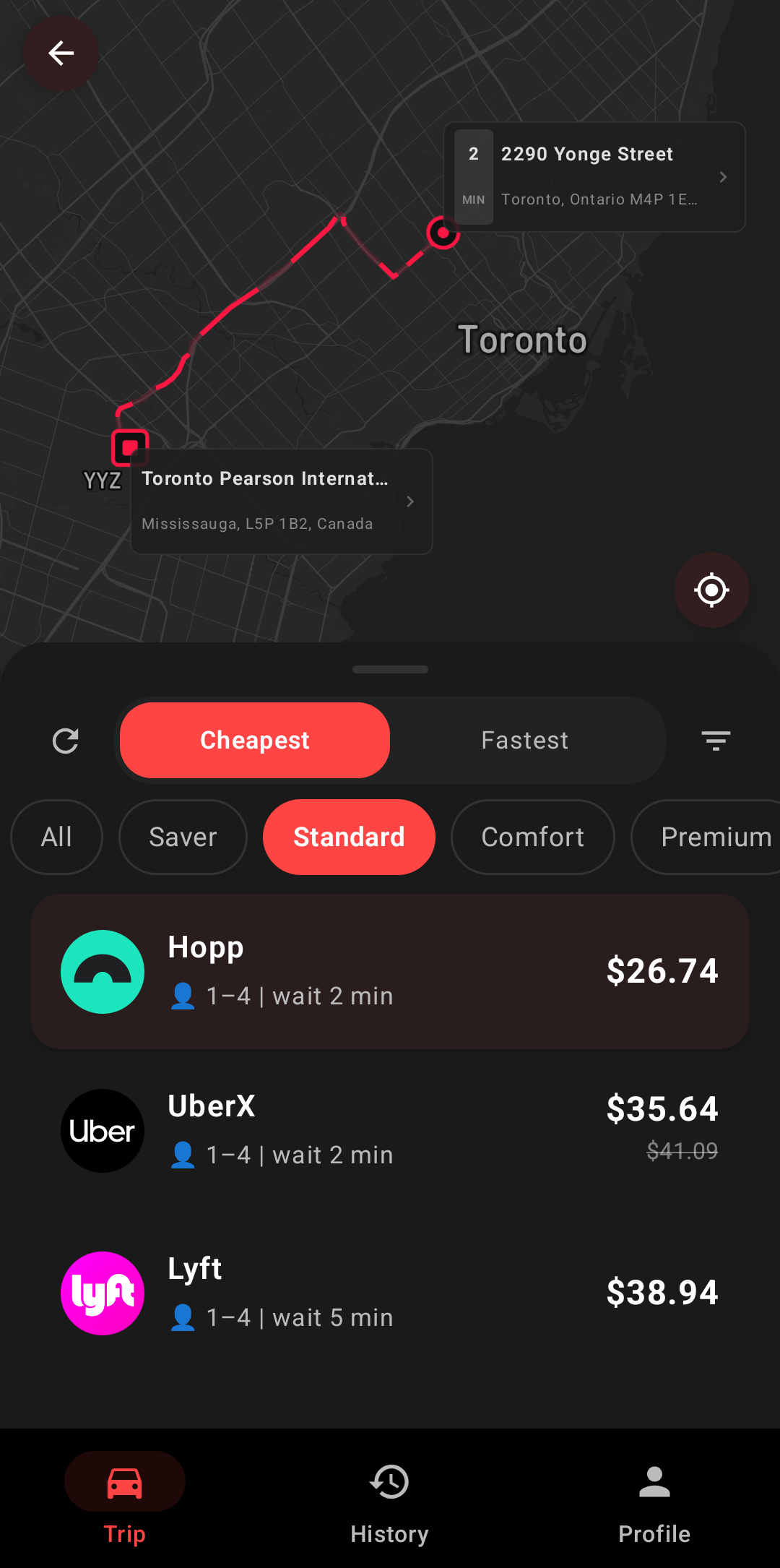
The single biggest saving comes from comparing 16 apps instead of defaulting to one. Use an aggregator like Payfair to do this automatically. The cheapest provider changes from ride to ride based on surge, city, and time.
2. Use one aggregator instead of 16 separate apps
Installing 16 ride apps is impractical. Payfair compares all of them in one interface, so you get the best price without managing a phone full of icons.
3. Avoid surge windows when possible
Surge pricing spikes during rush hour, weekend nights, bad weather, and around large events. If you can wait 5-10 minutes, the surge often drops. Alternative apps like Bolt or licensed taxi providers often don't surge simultaneously.
4. Check shared and pool tiers when available
UberX Share, Lyft Shared, and Bolt shared rides can cut costs significantly for non-urgent trips. They add 5-10 minutes to your route but save meaningfully off the standard fare.
5. Walk out of surge zones
Ride-hailing surge is geographically localized. Walking 3-5 minutes out of a busy area (stadium exits, venues, airport terminals) can eliminate the surge entirely.
6. Use local taxi apps in Europe, LATAM, and the Nordics
FREE NOW (9 European countries), taxi.eu (11 European countries), Cabify (Spain and Latin America), PideTaxi (Spain), Cabonline (Nordics), and Hopp (Toronto and DC) all offer competitive rates versus Uber in their regions.
7. Set price alerts on frequent routes
Payfair's price alerts notify you when fares drop on routes you take regularly — great for commutes, airport trips, or weekend errands.
8. Avoid airport surcharges where legal
Airport pickup surcharges vary by airport and provider. In many cases, walking to a nearby pickup point outside the official zone avoids the surcharge entirely. Check local regulations first.
9. Pay attention to tier selection
Standard tiers are almost always the best value. Higher tiers cost 2-3x more for a slightly nicer vehicle. Unless you actually need an upscale ride, skip it.
10. Use Payfair's savings tracker to learn your patterns
Payfair tracks your savings over time and shows you which provider wins most often on your routes. This helps you spot patterns — like "Bolt wins for my commute but Uber wins for airport trips" — and apply them without thinking.
Compare ride apps





Related guides
Frequently asked questions
Compare & book rides from your phone
The Payfair app compares real-time prices from 16+ services and lets you book the cheapest — all in one place.